Blog Archive

Showing posts with label Sophie Littlefield. Show all posts

A Bad Day for Scandal by Sophie Littlefield

I didn't think it was possible that Sophie Littlefield's Stella Hardesty crime novels could get better after  A Bad Day for Sorry, but A Bad Day for Scandal, the third in the series, is my favorite one yet. Stella, the woman who delivers "her own brand of renegade justice," has grown more comfortable and confident with her role. It's fun to watch her blossom at the age of fifty. Those of us over fifty know Stella has it right. Life can be pretty good at this age.

But, before she can get on with her life, and her romance with Sheriff Goat Jones, Stella has to cope with her past. Priscilla Porter, a snob no one in town liked, called, offering to pay Stella to do a job for her. When Stella couldn't resist the large sum of money offered, she found a body in the trunk of Priss' Mercedes. Why would Priss think Stella would know how to dispose of a body? And, then Priss had the nerve to threaten Stella with photographs of one of Stella's attempts to straighten out an abusive man. Stella has too much gumption to be blackmailed. But, she still ends up as a suspect when Priss and her brother go missing. Now, Stella has to keep her secrets from Goat Jones while she digs into Priss' past.

Sophie Littlefield has created some of the most interesting, lovable characters in crime fiction, beginning with Stella. Stella's grown in the course of this series. She tells her friend, Chrissy Shaw, "Nowadays I think plain old happy's a good goal. Happy and not getting beat on by anyone." And, Stella makes it clear that a woman doesn't lose her sex drive just because she's over forty. Chrissy has grown from an abused woman to Stella's partner in crime, a woman who discovered she isn't stupid. She's a whiz at computers, a hacker, and a "tech goddess." One of my favorite characters is the young teen boy down the street. Stella has taken Todd under her wing. Her friendship with Todd was the first indication that Stella had a kind heart, and as Todd has grown, his need for an adult in his life has grown. He's street-smart, but still young in the ways of the world.

Stella's wisdom is not only on target, it's funny.  Take the Green Hat Ladies, women who wear John Deere caps instead of red or purple hats because they were free from the rep. "The ladies had about three hundred years of residence in Sawyer County, along with it knowledge of the undersides and underbellies of most of the local families. Stella had often reflected that if the nation's top law enforcement agencies would each get themselves a flock of old biddies, they'd be able to crack every stubborn gang stronghold and drug epidemic and crime wave in the country. But it had been her experience that the wisdom of mature ladies was often tragically undervalued."

So, here's a salute to Sophie Littlefield and Stella Hardesty. They're champions of the underdog, whether they're mature ladies who are overlooked or forgotten, abused women, or teenage boys. Sophie wraps her characters in warm, funny crime novels with heart. A Bad Day for Scandal is Sophie and Stella at their best.

Sophie Littlefield's website is http://www.sophielittlefield.com/

A Bad Day for Scandal by Sophie Littlefield. St. Martin's Minotaur. ©2011. ISBN 9780312648374 (hardcover), 320p.

*****
FTC Full Disclosure - The publisher sent me an Advanced Reading Copy, hoping I would review it.

Tucson Festival of Books - Part 1

I was only able to get to the Tucson Festival of Books for one day this year, but it's a wonderful experience no matter how much time you spend there. The grounds of the University of Arizona are filled with booksellers, booths, and, most of all, people who love books. It's only in a book lover's world that the first sentence I overheard that day came from a woman standing at a table of children's books who said, "Anyone who read that book wouldn't grow up to poison their stepdaughter."

So, I had seven hours to enjoy. I started with a panel called "Slaying with a Smile." Moderated by Cara Black, it featured Josh Bazell, Craig Johnson and Sophie Littlefield. Cara did quick introductions, beginning with Sophie.  She said Littlefield's series features a 50+ woman in Missouri who was a victim of domestic violence. Oh, and Sophie's book won the Anthony Award for Best First Novel in 2010.

Craig Johnson writes the Walt Longmire series, and his books have won numerous prizes in France.  Black, who spends a great deal of time in France working on her Aimée Leduc books, said Craig is a cult favorite there. She tells people that she knows Craig Johnson.

Josh Bazell wrote his debut book, Beat the Reaper, when he was an intern at a hospital. The book made the Times list of the top thirty novels of the year in 2010. Bazell said he was visiting Tucson because his grandmother lives there. And, he waved at her in the audience.

Cara's Aimée Leduc mysteries are set in Paris.

Since the panel was supposed to be about humor, Cara asked, "Do you think you're funny, Sophie?" Sophie said, no. She had written for a long time, but she had never written funny material. She wrote dark, deadly, pain, angst. But it didn't sell. Once she was paid 12 pounds for a story she sold overseas, and it came in the mail. She was so excited to finally get paid that when she opened the envelope, she tore the check right in half. Littlefield read all kinds of things. She wanted to be the next Ken Bruen. And, then, when she went through her own mid-life crisis, she had a bad day that lasted four months. That's when she created her character, Stella Hardesty, and wrote A Bad Day for Sorry.

Craig Johnson & Sophie Littlefield
Craig Johnson said there are only 25 people in the town where he lives in Wyoming. He has to save up his humor because the other 24 people think he's not funny. So, he enjoys public appearances and the
chance to get out and meet people.

Johnson said he thinks you have to have humor in crime fiction. Anyone who works in law enforcement has to have a sense of humor. That style of humor isn't far from cowboy humor. Cowboy humor was explained once to him when he was fired. He didn't do anything wrong, but that's the way it was in ranching. The young guys were always fired in the fall, and the older guys kept on. So, he was called into the den to have a final drink with the boss, a den filled with books by Louis L'Amour and other western writers. And, he was told about cowboy humor. "Everything's funny till you're dead." And, then he paused, and said, "You know, dead's funny sometimes, too."

Craig said that's a lot like law humor. In book 3, he takes Walt to the city, and he's at a crime scene and asks a cop, "Why do you think he jumped off the bridge into the alley?" And the cop answered, "I don't know. Most men jump off into the water. Maybe he couldn't swim."

JoshBazell's character is a hit man who has turned informant. The FBI financed med school for him. He's working as an intern when one of his patients turns out to be his old mob's hit boss. Bazell has a gallows humor. While he was in med school, he worked with the chief medical examiner, and did crime scene autopsies. The period between Christmas Day and New Year's is the biggest time for crime in New York because everyone is home. He came into work one day to find a large package wrapped in butcher block paper, and it was leaking. It had a note on it that said, "Merry Christmas, Josh." A woman had complained that she knew the smell of corpses. You can't get the smell of corpses out. And, she insisted someone find that smell in her apartment. There was a body hidden there, wrapped in paper.

Craig told us he likes Sophie's books. They combine two of his favorite things, baseball bats and summer dresses.

Sophie reminded us she had said she was going through her own midlife crisis when she wrote A Bad Day for Sorry. She had 200+ rejections before she found an agent willing to take her on. No one thought they could sell the story of a 50+ plain woman who wants to get laid, and can't. Publishers didn't think she was a great heroine. Her agent, Barbara, submitted it to seven publishers, and had seven no's. But, finally she found a publisher.

When Littlefield did her first event, she felt grateful that anyone would read about Stella, a foul-mouthed woman who killed her husband, and used bondage equipment in the course of the mystery. Sophie had to learn about bondage equipment, which was a surprise to a nice girl from Missouri. When two women came up to her at the event, and said we read your book, she wanted to say, "I'm sorry." But the women said they really liked it. They were in their 60s, and they felt as if they weren't visible anymore. Forget about dating. You're cut off, even if you're living in your hometown. Sophie said she understood. She spent her life as a homemaker. When a homemaker is done, no one wants to look at her.

Littlefield's third book in the Stella Hardesty Bad Day series will be out in June. It's called A Bad Day for Scandal. And, the fourth book has been turned in. Sophie thought maybe she could be a voice for all those invisible women who need a voice.

Craig Johnson discussed humor as it related to his character, Sheriff Walt Longmire. Johnson's humor is situational, stemming from the relationship between characters. He deliberately contrasts his characters. Victoria Moretti, Walt's second-in-command, is very different from him. She's a transplant from Philadelphia, urban. Walt's rural. She likes the technical aspects of the job while Walt is aware of the social implications of the job. Longmire is careful with his language, while she's not so careful. Johnson deliberately set them up for conflict, and that conflict is probably why Warner Brothers and A&E have picked up the stories for a projected series called Longmire.

Craig said in his books, there is an anticipation of humor that is sometimes better than the scene itself. Readers know something is going to happen becuase of the set-up of characters. And, the job itself lends itself to a sense of humor. Johnson was out riding with the sheriff who advises him, and he asked him what was the most important thing sheriffs learn? The answer was, how to herd cattle with a cruiser.

That sheriff still vets Craig's books. He had Walt going undercover in Dark Horse, the fifth book, and the sheriff told him there are difficulties in going undercover in a town of 40.

Johnson said Vic Moretti is pretty hot. No one cares who plays Longmire in the TV series, but all of the old ranchers want to know who is playing Vic. He says, "You dirty old men."

Josh Bazell said his next book has a lot of political subtext. It's over the top. But, politics makes publishers nervous. They can handle a lot of sex and violence, but they don't know how to handle politics.

Cara said Josh wanted her to ask him to tell the story of how the two of them met, walking down the street in San Francisco, where she lives, and he lived at the time. Josh said he's a bit of an idiot savant, and never got the hang of the savant part. He's the type that, if you spill matchsticks, he'll tell you there are 104, when it turns out there were only 47.

Anyways, he was walking down the street with his cute dog, his earbuds in, and his sunglasses on. He thought he heard someone calling his name. It was Cara. He had dropped his credit card, six blocks earlier. He knew Cara Black wrote Murder in the Marais because he read it, but he didn't know what she looked like. Cara saw it was a gold American Express card, and chased him down. She looked at the card, and said, "Are you Josh Bazell, the writer, Josh Bazell?" So, that's how they met.

Asked if they had heroes growing up, Craig Johnson answered with John Steinbeck. He always found Steinbeck hilarious. He also liked George MacDonald Fraser, who was known for his Flashman series, but Johnson liked the humor in his McAuslan stories. Steinbeck had horrific things happen in his books, but there was always hope for humanity, some benevolence. You can do horrific things in books if you show faith in humanity.

Cara asked the authors how they balance murder and humor. Bazell likes funny books and crime books. He writes the books he wishes he had seen on the shelf. Johnson said it's hard to be serious if you have that humorous strain in you, or if you were raised in a family in which everyt is grist for the mill. It's like straight razors with a nerf ball. Craig said his family had a sharp sense of humor, particularly his father. His father referred to constructive stupidity. If you don't know any better, you can get through.

Sophie Littlefield said she came from a humorless family. They were Polish, and they went through some rough years. Her father is a Supreme Court historian. And, her brother, Mike Cooper, has a book coming out in 2012 from Viking. He found his sense of humor. He liked Bazell's Beat the Reaper. But, Sophie and Mike lost their mother to dementia when they were young. They got through it by cracking each other up. George Carlin referred to it as "Coffin humor."

Does humor make a character more empathetic? Johnson responded, "Of course! Who do you want to spend time with, someone with a sense of humor, or someone who goes on for 300 pages?"

He said he had a lot of advice when from other authors when he first started writing, most of which he ignored. People told him not to give Walt a pet because he'd have to take care of it. But, Craig's a rancher with all kinds of animals, so he gave Walt a dog. And, it's worked out well. Longmire is a western sheriff who drives long distances. Is it better for him to talk to the dog while he's driving, or talk to himself? The dog is foil for Walt. He has running monologues in which he talks out his thoughts to the dog.

Cara mentioned that Leonardo DiCaprio bought Josh Bazell's Beat the Reaper for a movie. Josh said his experience with books and movies means that the chance it will be actually made into a move is hazy at best.  He said his next book is sort of a sequel, but very different. It should be out at the end of the year, beginning of next. He agreed that humor is important. He finds it important to even joke about dementia and cancer. From his experiences as a doctor, he knows that once someone receives a serious diagnosis, everyone is afraid to be funny around you. It's important to acknowledge the situation, and incorporate humor. (Yes. On a personal basis, when my husband was dying of cancer, I told his best friend that he was to continue to call every day as he had, and continue to have a joke for Jim. He found it hard, but he did that, right until the end.)

Sophie's character, Stella Hardesty, had a hard time getting dates. Littlefield made that part of the humor. Her character is a vigilante, running a sewing shop. Sophie is sympathetic. She herself has a tiny resilient streak. Told she can't do something, she'll find a way to do it. Sophie understands that a woman's options are limited in a small town. What if you're fifty, from a small town in Missouri? You know everyone in town. Your options include dating the guy in town who dated everyone in town. So, by now, she's given Sophie two love interests. One of them, the sheriff, is bald, because Sophie thinks bald men are handsome.

Stella is a sympathetic character. There's also a teenager in the books, a thirteen-year-old modeled after a boy who might or might not have been Sophie's son. And, he isn't a cheerful teen like unrealistic ones in novels. He's realistic. There's a dance coming up, and Stella mentions it. But, no thirteen-year-old wants to go to the dance. He wants to go behind ARCO. That's realistic.

Johnson said the funniest book he ever read was The Miracle Life of Edgar Mint by Brady Udall. It's about a mailman on the reservation who ran over an Indian boy's head, and when the boy is in the hospital recovering all he wants to do is get back to the rez to tell the mailman he's OK.

Bazell said E.F. Benson's Queen Lucia was the funniest book he read. Cara said for her it was Eloise. She wanted to be Eloise and live in the Plaza.  From there, the titles deteriorated as Bazell and Johnson tried to outdo each other for outrageous titles.

Craig Johnson's next Walt Longmire book, Hell is Empty, is due out in June. The title comes  from The Tempest, when Prospero says, "Hell is empty, and the devils are all here." Walt and his Basque deputy, Santiago Saizarbitoria, are helping to transport prisoners in the mountains. Santiago hasn't been happy with the education he's getting, and Walt is always quoting literature, so he asks everyone in the office for a list of ten books he should have read. Walt gives him books such as To Kill a Mockingbird and The Three Musketeers. Ruby, the dispatcher, who trys to improve everyone, gives him Pilgrim's Progress and Dante's Inferno. So, Santiago gets into a discussion with a prisoner who questions him, and asks about the books. Finally, the prisoner says, at least I'm not reading a book by Alexander Dumb Ass.

In the course of the book, there's a federal case in the mountains that doesn't go smoothly, and Walt has to handle it. Santiago tells him he knows he always wants a book, and gives him Dante's Inferno.  From there, the book parallels The Inferno.

Sophie Littlefield's next book is also due out in June. A Bad Day for Scandal involves a woman no one likes who turned her back on everyone. And, Stella and her daughter, Noelle, had been estranged. They just got back together when Noelle reveals something about herself that Stella has a hard time accepting.

Bazell thinks his next book is going to be called Wild Thing. He wanted to call it The Dick, but the publisher wasn't willing to go there. It's a retelling of Moby Dick.

Since Cara Black was the moderator, she hadn't discussed her books, so someone in the audience asked her about her career. She answered that she kills people all over Paris. Her character, Aimée Leduc, likes bad boys. She's taller and thinner than Cara, and lives where Cara would like to live. Craig said whenever he goes to France, he reads Cara's books. Cara said, yes, and then he emails her from France. He responded that writing from Wyoming would have no effect.

Black asked the authors about humor in narrative vs. dialogue. Johnson said he likes turns of phrase. When he was going to write his first book, The Cold Dish, he talked to sheriffs, and then took  a ten year hiatus. When he went back to it, he realized he wasn't smart enough to hold Walt's attention for three hundred pages. So, he better be funny and smart to hold Walt's attention. He enjoys Walt's company.

Then, Craig discussed Bear, who started as a minor character for Walt to play off. He's an Indian with a dead pan delivery. White and red humor is dissimilar. Bear sometimes sounds as if he's talking bullshit, and when he's using Indian humor, the bullshit level goes up. Johnson said he has an Indian friend, Marcus, who told him he would have good weather for his book tour. He had seen the first sign of spring in Billings. He saw an Indian carrying a space heater into a pawn shop. He said that was a true story.

He said Wyoming is still untouched by mainstream society. He was with Marcus on the rez one day when they stopped to talk to a boy who had one shoe on. Marcus said you only have one shoe on. Did you lose your shoe? And, the boy answered, "No, found one." Craig likes to find oddities and explore them. The French just don't understand that Wyoming's about the same size, but only has 500,000 people. Cara commented that Craig straddles the world, being so popular in France.

Then, she asked Josh about his popularity in Europe. He said for some reason he's really big in Germany, and has a large audience there. He gets emails from Germany and Italy, but he doesn't read them because he doesn't read either language.

Craig said it wouldn't have been his first guess that France is where a Wyoming sheriff would catch fire. But, they like the humor. And, they've been inundated with the American West in movies. They're curious about the contemporary American West. They're interested in Indians, and open spaces. Open spaces don't exist in Europe, and there's a longing for that.

Sophie told us her only foreign sales have been in Japan. Fortunately, her brother is fluent in Japanese, because she's curious about the translation.

Cara Black wrapped up the program by reminding everyone where the authors would be signing. But, then she surprised me by saying before closing she wanted to acknowledge Lesa Holstine in the audience. She said Lesa has a blog, Lesa's Book Critiques. She said, she's a librarian from the Phoenix area, and her library, Velma Teague, is a destination for all the authors.

So, thank you, Cara.

Josh Bazell's website is www.beatthereaper.com

Craig Johnson's website is www.craigallenjohnson.com

Sophie Littlefield's website is www.sophielittlefield.com

Cara Black's website is www.carablack.com

Blackwell, Coonts & Littlefield for Authors @ The Teague

Deborah Coonts, Juliet Blackwell and Sophie Littlefield
There were so many authors coming into town before Tucson's Festival of Books that we were able to host two days of Women in Crime for Authors @ The Teague. Juliet Blackwell, Deborah Coonts and Sophie Littlefield starred in the first panel.

Juliet Blackwell served as moderator, and started by thanking me. She said I am a big supporter of the authors, a "huge player" in the mystery field. She told the audience about my blog, saying most authors slowly build a reputation, and it helps to have someone with name recognition in your corner. She went on to say that most authors have love affairs with their local libraries. They know what an influence libraries have on kids. And it was so wonderful to see the community really using the Velma Teague Library. The library has been busy every time she and Sophie have visited.

As moderator, Juliet said Sophie has an outstanding record of writing. They met two years ago at a mystery conference in Alaska. They both live in the Bay Area, but they met in Anchorage. They met in the bar because that's where mystery writers connect with others. Sophie told her she had written nine books, and Juliet was impressed. Then Sophie went on, but none are published yet.  It wasn't long before she landed a multi-book contract.

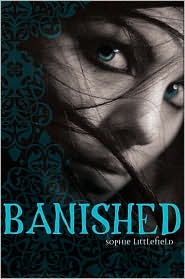
The first two books in that series are out, A Bad Day for Sorry and A Bad Day for Pretty. The next one, A Bad Day for Scandal, is due out in June. Then, Sophie wrote a young adult novel, Banished.

Sophie's latest book is Aftertime. Littlefield wanted to try another genre. That novel is part apocalyptic, with zombies. The zombies aren't the focus of the novel though. It's about how one goes about reconstructing society. Sophie and Juliet laughingly referred to Aftertime as The Stand in bra and panties.

Blackwell also reminded the audience that Littlefield won the Anthony Award for Best First Novel for A Bad Day for Sorry.


In introducing Deborah Coonts, Blackwell mentioned that Kirkus Book Reviews is notorious for not liking any books. Their reviews are always negative. But, they referred to Deb Coonts' debut novel, Wanna Get Lucky? as "Deliciously raunchy," and went on to say, "Although Agatha Christie is probably spinning in her grave." But that fits the setting since Coonts writes about Las Vegas. The second book in Deb's book is Lucky Stiff.

Juliet said she managed to publish her first novel. Her first series was written with her sister, under the name Hailey Lind. That was the Art Lovers' Mystery series. It was set in San Francisco, and featured Annie Kincaid, an ex-art forger, now a faux finisher. She said Annie legitimately gets entangled in art crimes. And, she said, "I think Lesa referred to them as caper novels." Sophie pointed out that Juliet did the cover of the fourth book in the series, Arsenic and Old Paint.

Juliet also writes two paranormal series. The third book in her witchcraft mystery series will be out in June. They feature Lily Ivory who runs a vintage clothing store in Haight-Ashbury, and she's a witch. Blackwell tries to be careful, presenting traditional beliefs in her books.

If Walls Could Talk was the first book in the Haunted Home Renovation series. Mel Turner is a reluctant contractor. She renovates high end homes in San Francisco. The second book in that series will be out in December.

The authors were asked how they find time to write. Deb has a writing schedule. She goes to the gym, writes until she can't write anymore, has breakfast, then writes more. She tries to write 1,500 to 2,000 good words a day.

Juliet said it isn't the writing. Authors have to find time for marketing. They're expected to be on Facebook and Twitter. Twenty years ago, writing was a private profession, not a public one. Most authors like to write in a room alone. There's an amount of pressure to be in constant contact with readers and reviewers through Twitter or Facebook. That isn't a natural fit for many authors.

Deb wanted to be a writer. She wanted to be published. She said for her first promotional event, she had an audience of 150 people. She was handed a microphone and told, "Go out, and be funny."

Sophie said she's naturally introverted. But, she can talk to readers. But, she has a hard time doing radio. It's hard to carry on a conversation with just one person on the radio, when that person might not be a reader. In discussing a writing schedule, though, she said she made a promise that her kids would always come first. Some things can go, and usually it's sleep that can go. Littlefield is grateful every day that she's still employed as a writer.

Coonts said she's on the opposite end of the spectrum from the others, just starting out as an author, trying to dig in when the business of publishing is imploding. Sophie and Deb met at Bouchercon, the mystery convention. Sophie said she's seen Deb's book all over. It had nice promotion. Coonts mentioned that Sophie wrote the blurb for Deb's latest book. "Lucky Stiff has outrageously imaginative characters, high-stakes action, sizzling love affairs, deadly enemies, naughty humor, and never-saw-it-coming twists. Irresistible."

That was Juliet's segue to ask about the sex and romance in Deb's books. Coonts answered that she was going through a divorce when she wrote Wanna Get Lucky? She thought she was writing a stronger romance novel, and the mystery was just there. She's proud of the relationships in the books. But, her publisher didn't know where to put her book. Coonts said just put me where Janet Evanovich is. Deb's been called "The Janet Evanovich of Las Vegas."

Deb's interested in her characters and having them grow. Sophie asked if Coonts shoots, and she said yes; she was raised in Texas. Her significant other is from New York, and he hadn't ever seen a gun. So, when he saw one at her place, he asked, "Who knows how to use that?" According to Coonts, in Las Vegas, you can shoot anything. In her third book, she has her character, Lucky O'Toole go to a shooting range with Dane, the security guard, and he thinks lucky doesn't know how to shoot. Deb finds it a funny scene.

So, what scenes do they love to write?  Deb said in Wanna Get Lucky? porn stars and swingers are in town at the same time. The climax is at a swingers' party in Spanish Trail where Coonts lives. Her father told her about wife-swapping parties in the '70s and some of the games played. Deb was still nervous about setting the party in her neighborhood until one of the neighbors said, oh, the neighbor a couple doors down holds a swingers' party once a month.

Since Juliet writes about witchcraft, she's always at risk of offending people. With witchcraft, you're walking a fine line. In the Bay Area, there are a number of people with Wiccan beliefs. And, different segments have different beliefs, so you can't please everyone. But, she hears how well she represents the community. Blackwell does lots of research. And, she likes to write about vintage clothes. She's not interested in long description. She won't stick around to read long narrative in a book. It's a difficult balance. How much narrative is enough. Blackwell went on to say her books are cozies.

Deb asked Sophie about her heroine, because she's pretty edgy. Littlefield said she's the only writer of bondage cozies. Her character, Stella Hardesty, is fifty. She's a plain, everyday gal. She was a victim of domestic violence, and now she has a business correcting abusers, bad guys who hurt women. Sophie had to do quite a bit of research on devices, so when she was in a shop, she knew all the devices for bondage. She said as a mystery writer there's a whole body of knowledge that you never knew you had. She had the same discovery when she did research for her apocalypse novel, Aftertime. Sophie was a homemaker before she started writing. Every day she's learning something new. After her apocalypse book, she knows how to make gasoline from plants. She said, "My job is a joy."

When Deb said her stories about characters, not the story of Vegas, Sophie agreed. Littlefield said Aftertime is a story of characters, not the zombies, although they are important to the story. The book shows how lonely her character was. But, that book is the first of hers with a sex scene. In cozy mysteries, you write, "They gently closed the bedroom door." But, her father came to see her on tour, and this was the one book she didn't want him to read. Aftertime is the first of a three book series.

Juliet mentioned that the authors all wrote books in which the places are almost characters. Coonts said she lives in Las Vegas because she did what every parent does. She allowed her fifteen-year-old son to pick where they would live. He picked Vegas because he was into golf, and wanted to be the next Tiger Woods. Now, she's glad he isn't.

But, Deb found magic in Vegas. It can be naughty, but, as she pointed out to the audience, that can happen right off Grand Avenue. There are shows, and silly things people do. They let their hair down in Vegas, and enjoy themselves. They're relatively sane. Vegas is a character in the books. The setting is a fictional hotel/casino. It's over-the-top. Coonts said Lucky isn't going anywhere because you have no imagination if you can't find a story in Vegas.

Asked about the story ideas, Deb said the porn stars do come to Vegas for the annual video awards, as in Wanna Get Lucky?  Coonts went, and sat in the back, and couldn't believe how seriously they took the awards. She said her son did go with her when she did research for the latest book. In Lucky Stiff, a female oddsmaker ends up in the shark tank at Mandalay Bay. Deb asked the attendant what would make the sharks attack a body. That was enough for her son. He never accompanied her again.

Littlefield's Bad Day series is set in rural Missouri. Sophie lived there for eighteen years, grew up there. Her new series is set in California. She's lived there for the last eighteen/nineteen years. Sophie said she can't do what Juliet does, though. Juliet gets all the city details right.

The apocalypse series is set in California's central valley. There's not a lot of vegetation there. Then, as you go toward the Sierras, you come to the foothills, gold country. Then it's forested. So, in a short time, you go from stark to lush. The vegetation and livestock is killed off in the book, and the characters have to find shelter. Sophie said authors ask, how can we punish our characters the most? What can we take away that hurts the most? So, in this series, Littlefield's character is a botanist, suffering from the loss of the plants. She knows the California wildflowers, the sense and smells. The plants will return in the course of the books.

When Blackwell maybe she writes about the Bay Area because everyone says, "Write what you know." Deb responded she prefers, "What can you imagine?" Juliet bases her stories on enough local detail to give the books the flavor of the area, a flavor of San Francisco. For instance, Blue Bottle Coffee is the current local favorite, replacing Peet's. There are coffee wars in the area between people who favor different brands.

Juliet's witchcraft series is set in Haight-Ashbury, hippie central in 1968. That gives a bit of flavor to the books, but hippies can't afford to live there now. She hates the term gutter punks, but that's what local street kids call themselves. They act like hippies, but have no social agenda. It's a local thing.

Deb Coonts said the locals are pleased that she's written a positive book about Las Vegas. She puts real places and people in her books, and they like that. Blackwell admitted she uses real places because she lacks imagination for some things. Deb did worry about setting a murder in Mandalay Bay, but that's the only shark tank in Vegas. She does give the Vegas police department a hard time in her books, because Vegas police are rude.

Since Coonts hadn't had the chance to introduce her character, I asked her to tell us about Lucky O'Toole. Lucky's in her early 30s. She was raised in a whorehouse. Her mother, Mona, owns the bordello. Mona's a real pill. Lucky never knew who her father was. At fifteen, she lied about her age and got a job as a cabana girl at a casino. She calls herself the chief problem solver at the Babylon, a position that doesn't really exist. As Head of Customer Relations, she handles guests and handles problems. Her best friend, Teddy, is a female impersonator who wants to get the girl. That's Lucky.

Deb said Vegas is defined by what's in town. There's the World Series of Poker, NASCAR, bull riders. Lucky deals with the fall-out. She's vulnerable, and doesn't trust people easily, but she wants someone in her life.

Deborah Coonts' third book is done, and turned in. The next one is called So Damned Lucky. What's it about? A magician disappears in the book. The UFO people are in town, and it involves Area 51. And, there's 300 miles of storm drains under Vegas, with people living underneath the city. And, there's a French chef.

Sophie Littlefield's A Bad Day for Scandal is due out in June. It's Sophie's favorite of her three books. The second in her apocalypse series, Reapers, is due out in July. And, her second young adult book will be out in October.

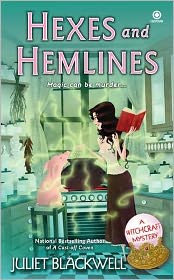
The third book in Juliet Blackwell's witchcraft series is due out in June, Hexes and Hemlines. Dead Bolt, the second in her Haunted Home Renovation series, will be out in December.

The authors were asked about their investment in their characters. Do the characters talk back?

Coonts admitted the French chef held her third book hostage. He was going to be the comic relief. She found herself stuck in the middle of the book. Then, one night, she was lying in bed in a fleabag hotel in San Antonio, and the French chef told her who he was. The book went fine then.

Juliet agreed, saying she's been in a weird place in her books. She knows where the story is going, but the characters wouldn't do that, or say that. In her first Art Lovers' Mystery, the landlord took over. He was just supposed to be the landlord, but he became a love interest for Annie. Blackwell said that's exciting. It feels like art, as if something is coming out.

Sophie said that is exciting. She has proposed a new YA series. While writing, she had difficulty with a plot point. When she understood the motivation, the entire plot followed from that. She likes to know her characters.

Characters need a backstory, a history, according to Juliet. But, it's important to know how much to tell the reader.  There's a whole history readers may never see.

Asked about outlining, the authors said there are two schools of thought. There are outliners, and there are pantsers, writing by the seat of your pants. Once you're established as an author, you can submit a proposal, and have it accepted. Until then, you may have to follow an outline.
 Sophie pointed out that Jeffery Deaver spends eight months outlining. Thriller writers tend to outline more than traditional mystery authors. They get everything worked out, and then just plug in dialogue. Authors who write character-based novels tend to be more pantsers.

Blackwell turns in an outline. Then, she gets a little money. When she turns in a manuscript, she gets a little more money. She's keeping her stories in San Francisco. She'd love to shift the stories to Oakland, where she lives. She's tried that, but her Manhattan editors say, I don't think so. She said it's a great discovery when you realize editors are working in publishing because they love books. They're not in it for the money. They're rooting for your books. They're not in it to give authors a hard time.

Deb said she completely wings it when writing her books. They're character-driven. Juliet knows her characters, and knows what would be fun.

Fun. That's an afternoon spent listening to Sophie Littlefield, Deborah Coonts, and Juliet Blackwell talk about books.

Juliet Blackwell's website is www.julietblackwell.net

Deborah Coonts' website is www.deborahcoonts.com

Sophie Littlefield's website is www.sophielittlefield.com

Authors @ The Teague - Women Who Kill


(Left to right: Zoë Sharp, Juliet Blackwell, Sophie Littlefield, and Jeanne Matthews. Photo: copyright Ed Sharpe, CouryGraph Productions)


What a treat to host the program "Women Who Kill" for Authors @ The Teague. It was a celebration with friends. I welcomed back Zoë Sharp, who did the very first authors program at the Velma Teague Library three years ago. She kicked off the series that became Authors @ The Teague. Juliet Blackwell is the author of the recent book, A Cast-Off Coven. Under the name Hailey Lind, she writes the Art Lover's Mystery series with her sister. Sophie Littlefield's first book, A Bad Day for Sorry has been nominated for all kinds of awards, and it won the RTBookReviews Reviewers' Choice Award. Her latest book is A Bad Day for Pretty. Jeanne Matthews is the author of a debut traditional mystery, in the style of Agatha Christie. Bones of Contention, though, is set in the Top End of Australia. After that short introduction, I turned the program over to Juliet Blackwell.

It was flattering when Juliet told the audience I was a treasure in the world of mysteries. She said I'm a reviewer and reader, and it's wonderful to have librarians who love books, and spread that love of books.

She went on to say the authors were all in town for the Poisoned Pen Conference, and you could find the entire program on the bookstore's website, www.poisonedpen.com.

Then, Juliet said, the program was called "Women Who Kill," so how many people have your protagonists killed? Or how many have you killed off? Is killing ever justified?

Jeanne Matthews' protagonist is southern, from Georgia, in her debut, Bones of Contention. She does know how to shoot. Dinah is a wannabe anthropologist. She's diverted by the planned euthanasia in Australia of a man she regarded as a father. Her life falls apart all at one time. She finds out her boyfriend is unfaithful; she loses her job, and her uncle is planning an assisted suicide.

Jeanne asked if we'd heard, "The past is a dance. It isn't ever past." That's the story of Dinah's life, childhood, and the myths of family. The book involves Dreamtime, the Aboriginal beliefs that they can communicate with their ancestors. Dinah as to deal with secrets of her family, and then she's confronted with murder. Family members are all suspects.

Bones of Contention is set in the Northern Territory. That area makes up 20% of Australia's land, but only has 1% of the population. There's colorful slang, with the language, Strine. The characters are colorful. And, of course there's the Aboriginal language. Matthews said she was only in Australia for six weeks, but she read a lot, and did a great deal of research. So, the final answer? Her heroine would kill if she had to, but she'd shoot to wound first.


Juliet mentioned that Sophie's protagonist has killed. Sophie Littlefield's character, Stella Hardesty, is a fifty-year-old rural housewife. She suffered from years of abuse from her husband. She finally killed with with a wrench, but it was an accident. After that, she thought she should offer to kill other abusive men. But, the publishing world wasn't really ready for a woman to kill, at least not a woman who isn't glamorous. She's a housewife. So, once the editors were done with her, she "retains, restrains, and retrains men." Sophie laughed and said she just thought of that phrase. Her books have been called bondage cozies. Stella is overweight, medium height, not beautiful. Sophie said she learned SO much about restraints online. A Bad Day for Sorry is her second book. Sophie is not an advocate for violence or vigilantism. Although she knew she was speaking in a state where residents can carry. Juliet mentioned that Sophie's latest book is written up in People this week.

Juliet didn't have to ask Zoë if her character kills. Sharp's Charlie Fox does kill, but not on a regular basis. But, it's her business, since she works as a bodyguard. She does use deadly force. And, Zoë corrected Jeanne, saying you don't shoot to wound. You aim for the central body mass, and fire until the person goes down.

She did say, however, that she may have to pretend that she is Australian. She was heading to New Orleans next, and she understands the British are not very popular there right now. So, she's changing her name to "Sheila," and going to talk about the barbie.

(Photo: copyright Ed Sharpe, CouryGraph Productions)

Charlie Fox discovers her ability to kill early on. The first book in the Charlie Fox series has finally been released in the U.S. Killer Instinct is published by a small press, Busted Flush. This is the start of Charlie's story, where she discovers her inner strength. Charlie's backstory is that she was a victim. This is the turning point, and she's no longer a victim. She's now a woman who kills.

Zoë said women who kill seem different than many of the male protagonists. Robert B. Parker's Spenser can shoot someone, and then go out and have a drink with Susan. But, it's not that easy for Charlie. She responds to threats, but she's not happy to live with herself afterward. Sharp's eighth book has just been released in the U.K., and she's delivered the next one to the publisher. She's put Charlie through the wringer.

Juliet asked if Zoë was tempted to rewrite the first book when it was released in the U.S. She answered that she's never quite finished with a book, so she was tempted to redo it. But, it's as if a snapshot was taken when the book was published. She could go back and photoshop it, but it was right for Charlie's life then. Sharp said she hopes she continues to progress with her craft. When asked which book is her favorite, it's always the next one.

As Juliet started to move on, Zoë reminded her that she was a participating author on the panel. She said as Juliet Blackwell she wrote Second Spirits. The second book in that series, A Cast-Off Coven, is just out. Juliet's character is a natural born witch. She has paranormal abilities, and was run out of her west Texas hometown at an early age. She lands in San Francisco in Haight-Ashbury, a good place to fit in as a witch.

Blackwell told us she takes witchcraft seriously. She does lots of research about it all over the world. Witchcraft and the healing arts often overlap. And, women are often the healers in a community, and tend to be the first accused of witchcraft.

Now, if you had powers, would you be tempted to use them? Blackwell's series character, Lily Ivory, doesn't hesitate to use hexes and charms. But, she's going to have Lily confront those issues. How far should she take her powers?

Now, in Sophie's book, Stella has no memory of killing her husband. Often, people don't, because they were too traumatized. Compare that to Charlie Fox, who was trained to kill in the military. Juliet said she learned to shoot when she was ten, and her father gave her a gun. He was a military man, and that's how she bonds with her father. Now, he likes to help her, and tell her what kind of gun her character would use. At the same time, her father taught her, if you use a gun in self-defense, you must be ready to kill. So, Juliet said she took killing seriously, even at ten.

Juliet wanted to discuss something a little different, so she asked everyone the same question. What's your character's drink of choice. Jeanne said Dinah drank dirty martinis. According to Sophie, everyone knows Stella drinks Johnny Walker Black. She buys it at Costco, and keeps her "soldiers" in a cabinet.

She said when she first went to a conference, everyone told her crime writers needed to drink scotch. So, she learned to drink scotch. And, fortunately, since she and Juliet ususually go to conferences together, she has a friend who drinks it, too.

Zoë said she's a teetotaler. But, she still stays in the bar with the other authors until 3 or 4 in the morning. Charlie does drink, whatever's at hand. But, she doesn't drink much, because of her job.

Sharp went on to say that guns are no longer allowed in Britain, in the U.K. You're no longer allowed to shoot. She herself was a competitive shooter. Even so, at the beginning of June, a man in Cumbria, where Zoë lives, took a shotgun, and killed twelve people. He was the thirteenth. He also injured another thirteen. The other tragic aspect was, in the U.K., the police are not routinely armed. So, they were following him, but they couldn't stop him.

Juliet couldn't think of a time when her witch drank. Sophie reminded her she must have had champagne because there were some champagne brunches. Juliet said Lily probably drank tequila. Now, there's a question. What affect does alcohol have on a witch? Juliet couldn't know because it hasn't happened yet. Sharp suggested slurred spells. Blackwell countered with, they're all helping her write her fourth book in the series.

Blackwell said on screen, tough women seem to be portrayed as men with breasts. So, how are they all exploring themes of murder, death, and self-defense, with women?

In Killer Instinct, the first Charlie Fox book, she's teaching self-defense to women. Sharp said, if you have to do it, you've failed. The trick is not to put yourself in that position. It's been shown that more people will respond if a woman shouts "Fire" than if she shouts "Rape."

Zoë went on to tell the story from Bouchercon, a mystery convention. Meg Chittenden is a very petite woman who looks like a wonderful granny. She and Meg were going to do a workshop on self-defense, "You Can't Run in High Heels." So, they practiced at the end of one room ahead of time. And, there Zoë was, with her hands around Meg's throat, and no one paid attention.

When questioned, Sharp said avoidance should be the first lesson to everyone, even men. Young men, 17-21, are more likely to die violently than any other group in the U.K. Zoë had an excellent instructor who taught karate, pressure points, and knife work. She said she'd get home at the end of a session, and have the bruises from pressure point practice. Self-defense is a last resort. You learn to use an opponent's size and weight against them. You use leverage. She practiced her her husband, Andy, who is 6'3". She knows how to dislocate a shoulder, but you don't want to do that.

With a laugh, Sophie said she certainly didn't try everything that Stella does. Stella actually doesn't have an attitude of violence. She's a community nurturer, a defender of the weak. She thinks that comes from her own role since she's been a mother for seventeen years. But, when her baby was born, she discovered she was a rage vehicle. She'd do anything to protect him. So, she sees Stella protecting people who can't protect themselves. The longer people are abused, the more opportunity they have to become a victim. It's a failure of the system. There are wonderful people, police and others, working to prevent violence, but the system is at fault. If someone threatened your sister, or mom, could you take someone out?

Jeanne admitted she committed a no-no and gave Dinah a relationship with a policeman. But, she ended it on page one. Dinah had heard of violence, and knows about it. But, she had few occasions when violence was appropriate until she went to Australia. She tries to sneak out of it. How can she avoid violence? She uses her brain. That doesn't always work, but she does survive.

Juliet mentioned cozy mysteries such as Agatha Christie wrote. If there are cats and knitting, chances are it's a cozy mystery. People who read cozies say they're not as violent as other mysteries. But, Juliet said she's always found them more twisted. There they sit with a cat and knitting, and deal with a dead body. It makes more sense for a bodyguard to deal with a dead body.

Matthews said she needed to give her protagonist enough gumption. Dinah isn't risk adverse. She just doesn't anticipate violence. She tries to solve the mystery, but tries to avoid violence. When asked, she said firearms are very restricted in Australia.

One of the audience members said Juliet mentioned acknowledgements at one time. What do you acknowledge people for? Blackwell answered that many people were very generous with their time. She met with a homicide detective for two hours over coffee, then she followed up with him. He did that because he wanted people to get it right. Sophie went on to say many people are acknowledged because of help in a field where they're specialists. People like to talk about their passions.

Juliet used the example of Cameron House in San Francisco. The next book in her Art Lover's series, Arsenic and Old Paint, comes out in September. It includes some of the history of Cameron House in Chinatown. It's a mission that is also a community center. Donaldina Cameron, who worked there, rescued Chinese girls who had been smuggled into the country, and sold as property in the "yellow slave trade." There were tunnels in the basement where she hid the girls. The staff at Cameron House gave Juliet a tour, showed her the tunnels. They were generous with their time. She acknowledges the staff at Cameron House because she wants people to know it's a real place, and an active community center.

Zoë Sharp mentioned Doug Lyle, who she acknowledged. He is a cardiologist and mystery writer. He answers all the strange questions and forensic questions that mystery writers ask. In one book, Charlie is shot. She's injured for 3/4 of the book, and that alters the way she deals with things. As part of her research, she talked to Doug as to how that injury would affect Charlie.

Zoë went on to say you do research, then throw away 90% of it, and use just snippets, nuggets. Readers are on a magic carpet ride, and anything that is wrong, anything that bumps them off is a wrong mistake. It spoils the book.

Juliet said in personal acknowledgements, you can thank all of your family. She once forgot her parents in a personal note.

Jeanne Matthews said, although Bones of Contention is published by Poisoned Pen Press, Carl Lennertz at HarperCollins spent several months editing her book. He was her lucky charm. She also acknowledged her writing group, since she's been it for years.

Sharp said she still goes to a local writing group. To her, it's important that you read your book out loud. The voice attracts you to a book. When a reader starts a book, you know almost immediately if you like the author's voice. Reading it out loud helps.

A writer's community, of some sort, is important. Juliet said she and Sophie go out for chicken and waffles with another friend. They can talk about what doesn't work. Sophie's brother is also a writer. She said she gives all the hard questions to her brother and her friends. Her deadlines are now more demanding. She values the input of her fellow writers. They know her weaknesses and strengths.

Juliet brought up titles, and wanted to know who picked them. Jeanne's title, Bones of Contention, comes from the Aboriginal myth of pointing bones, plus the contention between the family members. So, it was a double entendre. Sophie came up with Juliet's next title. Blackwell's publisher likes a combination of vintage clothing and witchcraft in the title. Sophie came up with the idea in a bar. Juliet said she couldn't come up with a title.

Sophie submitted about forty titles for her first book. She had a hard time. Author Craig McDonald told her to go with the Bible and country songs. But, it was a painful title process. She submitted about forty titles, and they finally went for A Bad Day for Sorry.

Zoë asked if they ever had a title they wanted to use, and no story to go with it. She's always wanted to use the old Shakespearean stage direction, "Exit. Pursued by a bear." They did mention that titles aren't copyrighted.

I asked the authors what they were working on, or what their next book would be. Sophie has a YA paranormal series coming out. The first book is Banished, followed by Unforsaken. It's for readers thirteen and up. Then, she has a new series, a Post-Apocalyptic one, coming out under another name.

Jeanne Matthews' next book is called Bet Your Bones. It's set in Hawaii, and deals with Hawaiian myths.

Sharp has already delivered her next Charlie Fox book. The titles have caused problems. Her fourth book was called First Drop. The book starts on a roller coaster, and when you hit the first drop, there are no brakes, and you're stuck until the end of the ride. That symbolized the book. But, that was the first book published by the American publisher. They wanted that to stand as the first book in the U.S., and the next one to be called second something. So, it became Second Shot. That book was supposed to be called Fall Line. It takes place in New England. And, the fastest way downhill when skiing is the fall line. Then, there was Third Strike. She changed publishers. Her current book out in the U.K. is Fourth Day, about a cult. She's working on the next book.

Juliet's next book is due out Sept. 9th. It's under the name Hailey Lind. Arsenic and Old Paint is a book in the Art Lover's series, written with Juliet's sister. It's a continuing story, and she joked that she wouldn't know if it was good until Lesa reviewed it.

Then, Blackwell has a new series starting, the Haunted Home
Renovation series. Her character is a failed anthropologist who took over her father's construction company. It's two years later, and there are paranormal elements in the book. Juliet also said her own father is the father in the book. That book, called If Walls Could Talk, is due out December 5th. The third book in the witchcraft series is due out in June or July next year. It's called Hexes and Hemlines.

One audience member asked why authors use different pen names. Julie answered that Hailey Lind is a family name that she uses when she writes with her sister. But, she might have changed it anyways when she wrote the paranormal series because readers expect authors to write a particular type of book. There's a contract between authors and readers. Sometimes, a new publisher wants another name. Tim Myers, a cozy writer, was mentioned. He writes under a number of names. The publisher wanted female names.

Sophie thought about using a male name for her Post-Apocalyptic book, because most of the authors are male. However, this publisher has a number of female readers, so she's using a different name, but it's female.

Zoë might have picked a male name if she was doing it over. Thriller writers tend to be male. She once had a review that said the book was, "The best thriller written by a woman." She might have changed to a male name because there is a prejudice against women in thrillers.

The final question of the afternoon involved setting. Is it easier to choose a place you know, or more fun to pick an exotic setting. What's easier to write? Jeanne Matthews enjoyed learning while she wrote about Australia. She learned a euthanasia law passed in the 1990's in the Northern Territory was very contreversial. The Aborigines feared it, because they thought they would go to the doctor, and be euthanized. They had been experimented on in the past. Matthews was able to put her own spin on the setting, using an outsider, Dinah.

Zoë's Charlie Fox is a Brit looking at the U.S. through a Brit's eyes. She's an outsider. So, she's looking at things slightly off from how Americans see it. It's been said we're two people divided by a common language. But, Sharp said the best books are ones in which the setting becomes a character, and the story can only be in that place.

In talking about language, Juliet said one phrase Americans never use, but a British friend used to say to her, was, "I'll knock you up." Sharp's answer was that came from mill towns in England. No one had clocks, and a man would bring a stick and wake people up with it. In north England, they would "knock you up."

Juliet said Sophie's books are set in rural Missouri. And, the people talk in a special way. Blackwell tried to move her book to Oakland, where she lives. She loves it. But, her publisher said let's keep it in San Francisco. Zoë ended the program by saying it's hard to think of books as being set in the "mean streets of England," as they are in American cities, such as LA or Detroit.

It was a wonderful afternoon! Maybe the last picture will show what a good time we all had with "Women Who Kill."


(Photo: Copyright Andy Butler, ZACE Photographic, used with permission)

Winners & a Women Who Kill Giveaway

Congratulations to the winners of the last contest. Angela W. from Frederick, MD will receive Larry Karp's The Ragtime Fool, and Susan C. Shea's Murder in Abstract goes to Bruce H. from Montgomery, AL. The Father's Day books from Hatchette Book Group go to Denise R. from Clinton Twp. MI.

I have a special treat this week. Yesterday, I hosted a MysteryPalooza, Women Who Kill, for Authors @ The Teague. It was a special afternoon with authors Zoë Sharp, Juliet Blackwell, Sophie Littlefield, and Jeanne Matthews. I have autographed copies of their books to give away!

Killer Instinct is the very first book in Zoë Sharp's Charlie Fox mystery series. If you haven't read these thrillers yet, this is a great place to start. If you have read the rest of the series, now you can read the first book, available for the first time in U.S., as to how Charlie overcame her past experiences. She was kicked out of the British Army, but you can't keep Charlie down. When a killer starts taking an interest in Charlie, she's able to stand and fight.


Prefer your murder a little cozier? Check out Juliet Blackwell's A Cast-Off Coven. Lily Ivory's a witch who owns a vintage clothing store in San Francisco. She jumps at the chance to acquire a trunk full of Victorian-era clothing from the San Francisco School of Fine Arts. She isn't quite as eager to deal with the ghost or evil spirit that seems to be haunting the school. And, a murder doesn't make it any easier to cope with the disturbances acting on the emotions of the students.


A Bad Day for Pretty marks the return of Stella Hardesty, the character that took the mystery world by storm in Sophie Littlefield's A Bad Day for Sorry. How does Stella get into these messes just trying to help out a friend? When a storm knocks over a concession stand, uncovering a body, a friend's husband is the main suspect. Stella just knows the gentle man couldn't have done it. And, then there's Stella's feelings for Sheriff "Goat" Jones. She just might have to get over those feelings. It seems Goat's life is complicated.


Are you a fan of traditional mysteries in the Agatha Christie style? Debut author Jeanne Matthews takes us to the Top End of Australia in Bones of Contention. But, feuding families are quite similar when they gather together over the making of a will. Even in an isolated lodge, someone will end up dead. This book brings readers a traditional mystery with Australian lingo and Aboriginal myths.


There will be four winners this week! Which book would you like to win? You can enter to win all the books if you'd like, but I need separate entries for each. If you'd like to win one, email me at Email me!. If that link doesn't work for you, the email address is: lholstine@yahoo.com. Your subject line should read either, "Win Sharp," "Win Blackwell," "Win Littlefield," or "Win Matthews." Your message should include your mailing address. Entrants only in the U.S., please.

The contest will end Thursday, July 1 at 6 p.m. PT. The winners will be selected by random number generator. The winners will be notified, and the books will go out in the mail on Friday. Good luck!